An Unlucky Date?

I very rarely say “good luck” to someone – and in particular I don’t say it to a PhD candidate who has their viva in the near future.

I don’t believe in superstitions but have written before about my good day socks, the paperweight on my desk and listening to music to help me get ready.

Good luck and superstitions? No.

Best wishes and support? Yes!

Your viva won’t be harmed if it is on Friday the 13th. You won’t pass your viva because of your socks either but you might feel better if you do things to steer your confidence and nervousness.

You don’t need luck but you might benefit from taking specific actions, using placebos or rituals to help you feel better.


If you’re not sure what you need to steer your confidence then the process is simple. Reflect on what you could try to come up with options. Then decide on what you will do.

You don’t need luck to pass your viva – but you might need help to build your confidence.

All The Opportunities

A PhD journey is not successful because you do everything perfectly first time or achieve 100% of your goals. You find success because you make enough of all the opportunities that you have found and made for yourself along the way.

You made the most of what you could and were able to do something with it. You didn’t find the answer for everything but you found enough somethings that you made something that mattered.

The goal isn’t that different for your viva. You don’t need to get 100% or avoid too many wrong answers. Instead you need to make the most of all of the opportunities you’ll find there. Every question or comment from your examiners is an opportunity and invitation to say more and do more – to show more of what you did, who you are and what you can do.

An I don’t know or I forget is a small thing. It won’t lead you away from success. Make the most of the opportunities you find at your viva and you’ll be fine.

Share What You Need

There are institutional regulations and general expectations that underpin what might happen at a viva – and yet so much of what happens in every viva is unique.

One aspect of this is simply a person’s situation and needs. Nevermind that every thesis and the research is unique – every candidate has their own preferences, requirements and situation. You might like to do things a certain way or want things to happen in a certain way at your viva.


In some cases you might need particular support to help you get ready or to help your viva be a fair and accessible experience for you. Your institution’s regulations will show you what you need to do if that’s the case; universities have got a lot better at listening to their PhD candidates who need support in the last decade but none are perfect at following processes. If you have needs for your viva then you might have to follow up and make sure that the right people know the right information.

For more general needs talk to your allies. Ask for practical support from your supervisors, friends and family. Reach out to your graduate school or doctoral college to see what help they offer people getting ready for their viva.

Support isn’t just for the viva itself. Think about what you need from others to help you get ready.

A Viva Prep Checklist

Make sure you tick off the following as you get ready for your viva!

  1. Read your thesis carefully.
  2. Mark the first page of each chapter.
  3. Read the most recent two or three papers by each examiner.
  4. Check the regulations.
  5. Annotate your thesis.
  6. Spend time creating summaries to help your thinking.
  7. Find opportunities to rehearse.
  8. Ask for support when you need it.
  9. Look back over your PhD to build your confidence.
  10. Take time to rest!

All of these help. Numbers 9 and 10 are particularly helpful and also the most liable to be missed.


PS: Looking for more viva prep ideas and information? Then check out my live 3-hour Viva Survivor webinar on Wednesday 25th March 2026. Attendees get four-week access to a recording of the session and follow-up materials too. There’s more information at the link but please get in touch if you have any questions or want to know more. Thanks for reading!

Failing Conditions

Failing the viva isn’t something that happens when…

  • …you get a question “wrong”.
  • …you say “I don’t know” in response to a question.
  • …you go blank for a moment or two.
  • …you have typos or corrections to complete.
  • …you are nervous or stressed.

Failing isn’t a little thing so the reasons for failing aren’t little either.

Failing isn’t the result of missing one thing or of one thing going wrong. It’s not random but specific.

If you’re certain of your efforts you can be certain of the outcome for your viva. If you’ve done the work, developed your research, developed yourself and prepared well then you can be certain that you are on track to succeed.

Different Ways

As you prepare for your viva it might be helpful to consider the alternatives you didn’t choose.

  • Were there other papers you could have cited?
  • Are there other possible methods to the process you selected?
  • Can there be other explanations for what you’ve presented in your thesis?

When you find something that could be different then unpick the situation to help you explain it to your examiners. Ultimately you made a choice so you have to explain why you made it.

  • Were there alternatives? If so, why did you choose this?
  • If there were no alternatives at the time what made you realise the possibility later?
  • If you would keep your choice, why? If you would change your choice, why?
  • What did you learn through the process?

It’s uncommon for there to be only one way to do something during a PhD (although it can be that different ways arrive at the same ultimate outcome or result).

If there was another way then reflect, understand why and consider how you could explain the situation to your examiners.


PS: I’ll be talking about viva prep, viva expectations, examiners and lots more at my live 3-hour Viva Survivor webinar on Wednesday 25th March 2026. Attendees get four-week access to a recording of the session and follow-up materials too. More details at the link – and you can save £10 on registration with code VSMARCH2026 before midnight tonight. Thanks for reading!

Prepared To Pass

You can be ready to succeed at your viva without being perfect.

You don’t need to have read every paper or considered every idea. You can’t anticipate every question or comment your examiners will have. You don’t need to have done it all. You don’t need perfection.

You need enough. You need to know enough, have done enough and be enough.

You can’t be perfect. You can be prepared.


PS: I’m exploring the practicalities of viva prep and lots more at my live 3-hour Viva Survivor webinar on Wednesday 25th March 2026. Attendees get four-week access to a recording of the session and follow-up materials too. More details at the link – and you can save £10 on registration with code VSMARCH2026 before Sunday 8th February 2026. Thanks for reading!

Creative Rehearsal

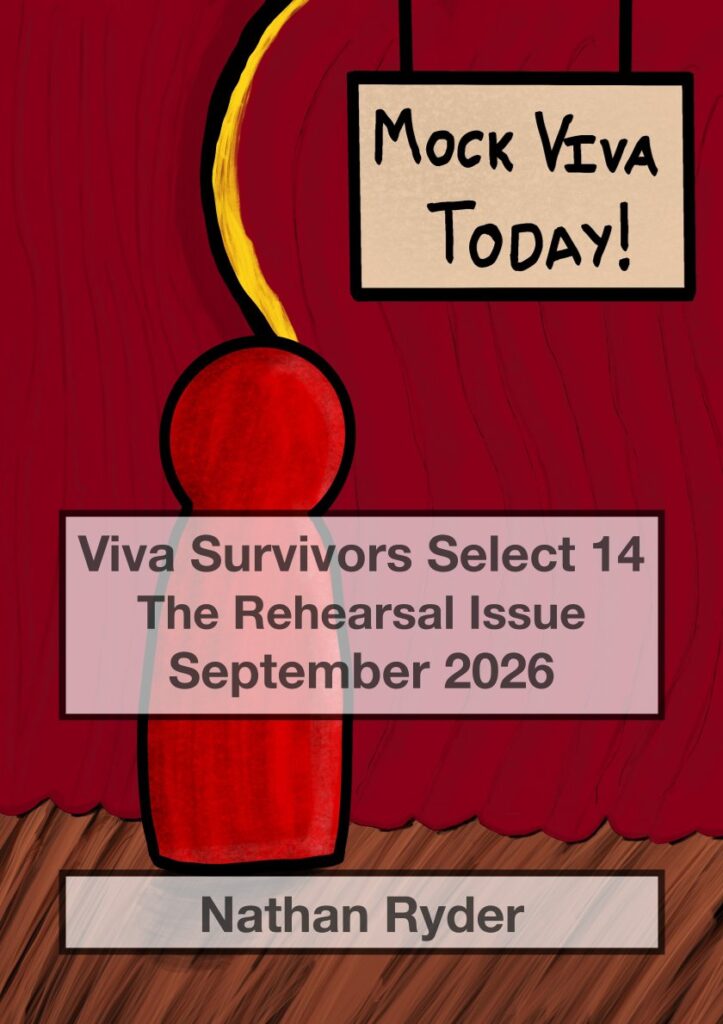
A mock viva is one approach that you can take to rehearsing for your viva. It’s typically a good approach. Sitting down with your supervisor and responding to questions that are representative of what you’d find at the viva is a great practice.

It’s not the only way though:

  • Have a mini-viva: ask friends to use a resource to have a chat!
  • Go for coffee: if your friends know a little they can ask relevant questions!
  • Give a seminar: invite a group to ask questions after a short presentation!
  • Ask me anything: sit down in your department with a sign saying that you’re accepting all questions about your research for a few hours!

You can get creative with rehearsing for your viva. The closer your practice to the expected viva experience the better – but don’t undervalue the emotional help that doing something fun could have.

How else could you get creative with your viva prep?

Achievements

Think back over the course of your PhD so far and list five big achievements.

  • How did they happen?
  • What did you do?
  • Why do they stand out to you so much?
  • And what did those achievements allow you to do next?

Remember that all of your achievements are yours. You did the work.

You can’t be certain about the questions you’ll face at your viva or your examiners’ opinions but you can be certain of the work you have invested and what you’ve achieved.


PS: I’ll dig into more confidence-building viva prep at my live 3-hour Viva Survivor webinar on Wednesday 25th March 2026. Attendees get four-week access to a recording of the session and follow-up materials too. More details at the link – and you can save £10 on registration with code VSMARCH2026 before Sunday 8th February 2026. Thanks for reading!

1 2 3 334